
Celie and Albert Relearn Each Other
The Color PurpleThis thread follows the changing relationship between Celie and Albert as abuse gives way, slowly and incompletely, to listening and friendship.
increasing Bearing strength in each event
 decreasing
Bearing strength in each eventdecreasingA Marriage Without Intimacy
A Marriage Without Intimacy
A Role Imposed
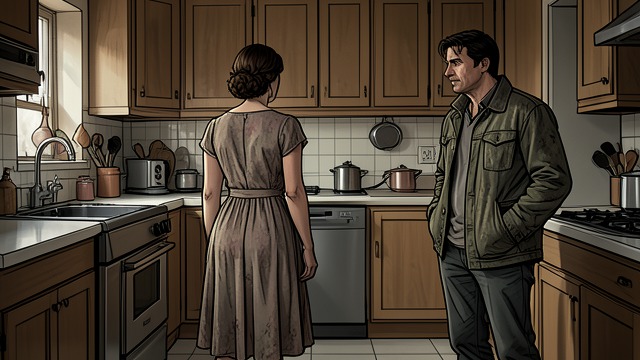
Celie enters marriage because her father arranges it. Albert expects her to work and submit, while she has little opportunity to say what she wants.
Their sexual relationship is marked by coercion and absence of mutual care. Celie experiences the marriage as another form of captivity.
A Distance Deepens
Albert's attachment to Shug does not create tenderness between him and Celie. He does not ask about her feelings or recognize the costs of his behavior.
The relationship begins with a power imbalance that must be confronted before any genuine connection is possible.
A Shared Attachment to Shug
A Shared Attachment to Shug
Two Kinds of Longing
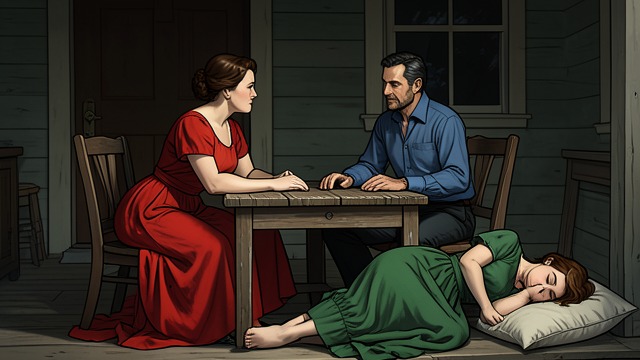
Albert watches over Shug as she recovers, while Celie cares for her body and discovers her own desire. Both are attached to Shug, but their histories and expectations differ.
The shared focus does not make Celie and Albert allies. Instead, it reveals how little they have spoken honestly with each other.
A New Understanding
Celie learns about pleasure and begins to see her body as her own. Albert's relationship with Shug remains shaped by an old love he never turned into a shared life.
Their connection to Shug complicates the marriage rather than repairing it.
A Confrontation and Departure
A Confrontation and Departure
Naming the Betrayal
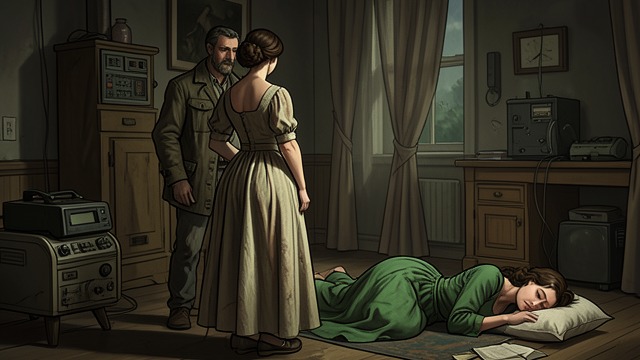
Celie tells Albert that he is a lowdown dog and confronts him over Nettie's letters. Her language makes explicit the harms that had long been kept inside the household.
When he threatens her, she defends herself. The marriage ends as a relationship of authority, even though its consequences remain.
Separation
Celie leaves with Shug, and Albert loses the household life he had taken for granted. His reaction reveals how much he depended on Celie's work and silence.
The departure creates the distance in which he may begin to change.
An Apology in Practice

An Apology in Practice
Changed Habits
Albert works, cleans, and listens in ways he once left to women. He does not become a different person overnight, but he begins attending to the life around him.
His actions matter because they contrast with the old assumption that Celie must serve him without reciprocal care.
Naming Responsibility
Albert admits he mistreated Celie because she was not Shug. Celie accepts the truth without pretending the harm was small.
Their conversation makes possible a friendship grounded in acknowledgment rather than denial.
Companions on the Porch

Companions on the Porch
Ordinary Conversation
Celie and Albert sit together, talk, sew, and smoke. He asks about her work and her children, and she shares knowledge from Nettie's letters.
Their companionship develops through repeated ordinary contact, not a dramatic restoration of marriage.
A Chosen Boundary
Albert asks to marry Celie again, and she refuses while offering friendship. He accepts the boundary and continues to value her company.
The relationship reaches a new form by respecting the choice Celie once had no power to make.
During Celie's early years with Albert
When Shug is ill at Albert's home
At the dinner before Celie leaves for Memphis
After Albert begins returning Nettie's letters
After Celie returns from Memphis
